This federal information helps form coverage. It’s 6 months late : NPR
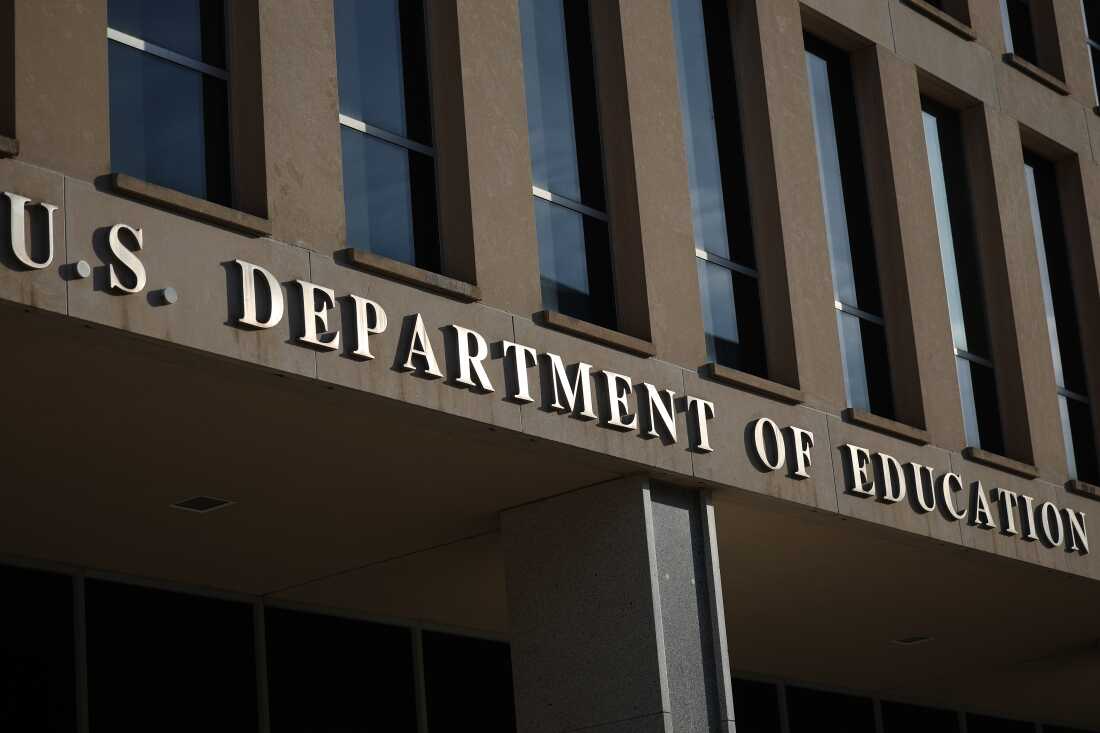
For greater than 50 years, the Training Division has revealed a number of realities about how college students are being handled in each public college throughout America: which children are being bullied, which of them are being harassed and which college students can entry the web, amongst different issues. The company’s Civil Rights Information Assortment is meant to just do that — assist maintain colleges accountable.
The most recent info, collected in regards to the 2023-24 college 12 months, was alleged to be revealed final December, in accordance with the Training Division’s personal deadline.
However it hasn’t been.
The company hasn’t responded to a number of requests from NPR asking what’s behind the delay.
Federal paperwork will be sluggish, and delays aren’t all the time trigger for concern, however advocates are on edge within the midst of current plans the Trump administration introduced to maneuver the Workplace for Civil Rights — which homes the Civil Rights Information Assortment (CRDC) crew — from the Training Division to the Division of Justice.
That deliberate switch follows months of federal motion that upends the way in which college students’ civil rights have been protected prior to now: The Trump administration has cracked down on initiatives associated to variety, fairness and inclusion, for instance, and prioritized investigating colleges that permit transgender athletes to compete in girls’s sports activities.
“This administration has repeatedly utilized civil rights regulation in ways in which ignore or dismiss the very actual inequities that persist in our schooling system,” says Denise Forte, president and CEO of EdTrust, a assume tank centered on addressing schooling inequity. The delay in releasing the CRDC information, she says, “raises severe considerations, significantly as this administration seeks to downplay the impacts of racism and financial inequality in public schooling.”
A former Training Division worker who labored on the CRDC tells NPR the crew continues to be intact. Nonetheless, its future is unclear: Whereas the Trump administration has introduced the Workplace for Civil Rights is shifting to the Justice Division, the method might take months, like different plans to outsource components of the Training Division’s work. The previous worker, who requested to not be named out of concern {of professional} repercussions, mentioned a part of the delay might must do with the 2025 authorities shutdown that affected operations on the Training Division for over six weeks, together with work on the CRDC.
The division additionally has been winding down its operations because the Trump administration took workplace, slicing about half the division’s total employees final 12 months.
Lindsay Kubatzky, director of coverage and advocacy on the Nationwide Middle for Studying Disabilities, agrees with Forte’s evaluation {that a} delay on this information might must do with the Trump administration’s chipping away at methods which have traditionally helped maintain colleges accountable for shielding college students’ civil rights. “This administration sadly has proposed quite a lot of insurance policies that may make it much less clear on how college students with disabilities particularly are being served in public colleges,” he says.
For instance, Kubatzky factors to how the Trump administration has proposed eliminating a requirement for states to trace which college students are being recognized as having disabilities primarily based on race and ethnicity. Traditionally, Black and brown college students are extra usually wrongly recognized as needing particular schooling than their friends.
Whereas that incapacity information isn’t straight tied to the CRDC, Kubatzky says it is an instance of the administration working to undo federal civil rights accountability instruments. The CRDC, he says, additionally performs a key function in serving to advocates present the place “colleges should not serving college students and it additionally provides us a lever to push for insurance policies which might be extra inclusive and fewer unfavorable towards college students.”
For instance, Democratic Sen. Cory Booker of N.J. and U.S. Rep. Joaquin Castro of Texas used findings from CRDC information to craft a invoice proposing the enlargement of entry to Superior Placement programs for underrepresented college students, together with minority and disabled college students, whom the info discovered had unequal entry to those courses. A spokesperson for Booker’s crew mentioned the invoice can be reintroduced within the coming days.
One of many questions the delayed dataset was set to reply is which college students have entry to the web as AI performs a much bigger function in schooling, in accordance with the previous CRDC staffer who spoke on situation of anonymity. “Like, are our colleges able to usher on this wave of AI? Will all college students have equal entry to gadgets and web capabilities?” the particular person mentioned. “How do we all know if the CRDC would not come out?”
The previous staffer described the CRDC crew as a deeply dedicated group of people who find themselves centered on guaranteeing “entry and alternative” for the nation’s most marginalized college students. “We will not make the appropriate selections for college kids if we do not have perception into their present realities.”
Edited by: Nirvi Shah
Visible design and improvement by: LA Johnson