Why teenagers don’t get sufficient day by day train : NPR
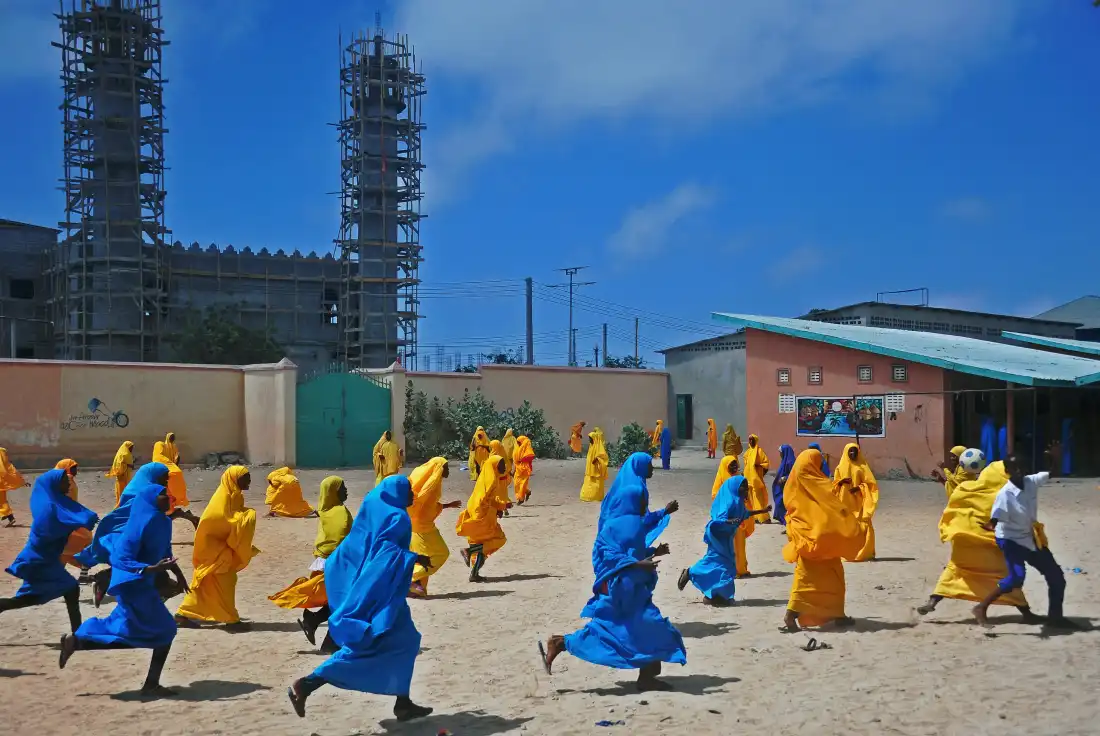
These soccer-loving Somali college students are doing what well being specialists need all teenagers to do day by day — getting in some “moderate-to-vigorous” train.
Mohamed Abdiwahab/AFP/by way of Getty Photos
cover caption
Mohamed Abdiwahab/AFP/by way of Getty Photos
The World Well being Group recommends adolescents spend at the least one hour a day exercising sufficient to mainly break a sweat — a brisk stroll or a extra intense pick-up soccer sport. Lot’s of analysis suggests this degree of exercise is essential for supporting rising our bodies and minds.
However new international information suggests solely a small minority of youngsters and youths get that a lot. The truth is, one in 4 report not hitting 60 minutes of moderate-to-vigorous train any day of the week, in line with a new examine in The Lancet International Well being. Women, in addition to adolescents from middle- and lower-income international locations reported even decrease ranges of train.
“The findings are disappointing, as a result of one of many main outcomes is that the development during the last 15 years is flat,” says Fiona Bull, head of the bodily exercise unit on the World Well being Group, who co-authored the examine. “These information are a name for us to relook at what we’re doing. Enterprise as typical is not going to change these traits.”
Altering habits in these teen years might have a lifelong affect, says Solveig Cunningham, a worldwide well being researcher at Emory College. “As an adolescent, in case your baseline is zero days of bodily exercise, that is going to be your baseline as you go into maturity.”
What 3 million teenagers revealed
So how do researchers know whether or not adolescents are — or aren’t — working up a sweat? It is difficult. Researchers would love to have the ability to strap smartwatches to youngsters to get detailed information, however that may be expensive. The subsequent greatest technique is to ask a fundamental query — what number of days throughout the previous week had been you energetic for at the least 60 minutes?
The report attracts on information from surveys posting some model of this query to over 3 million adolescents from 140 international locations over the previous 15 years. Solely about 14% of youngsters worldwide reported getting an hour a day of train. Globally, the common adolescent reported lower than 3 such days per week, the examine discovered.
Youngsters from low- and middle-income international locations tended to be much less energetic than their counterparts from wealthier Western international locations, the examine discovered. There isn’t any one rationalization for this sample, however a couple of seemingly causes stand out.
“Bodily exercise is a matter of alternative,” says Andrea Ramirez Varela, an epidemiologist on the College of Texas Well being Science Middle in Houston. In lots of decrease revenue international locations, she says that the setting — the place they reside, go to highschool and play — usually restricts alternatives to be energetic. The examine did not break down the city and rural divide, however some analysis suggests rural adolescents in lower-income international locations transfer extra, she says, usually out of necessity. In more and more populated city areas, exercise is decrease.
Many cities aren’t designed to be walkable, says Varela. In Latin America, the place she does most of her analysis, “many mother and father assume it is unsafe to simply let your youngsters stroll alone to and from locations,” she says — a lot much less exit and play independently. In some city facilities, air air pollution could make being energetic outdoor unhealthy too.
Screens might play a task as nicely. After faculty, “youngsters and adolescents, once they arrive dwelling, they begin watching TV, they’re in entrance of a display screen,” says Valera. “As a result of this digital world is so engaging, they’ll be sedentary the remainder of the day.”
Cultural boundaries
The report additionally revealed a cussed gender hole.
Women had been much less energetic than boys in nearly all international locations. Practically 30% do not train in any respect throughout the week in comparison with 22% of boys. Solely 11% of ladies had been energetic day by day in comparison with 17% of boys. And women’ weekly common of energetic days was decrease (2.4 vs 3).
“It’s totally worrying to see this gender distinction so early,” says Bull, noting that the distinction usually persists into maturity.
Totally different norms round what’s acceptable for ladies usually drive that divergence.
“In lots of locations, when women attain puberty, there are taboos to partaking in bodily exercise,” says Cunningham. Take India, for instance, the place Cunningham has centered a lot of her analysis. “Moms or grandmothers will say, ‘Effectively, you already know, we do not need women spending quite a lot of time exterior. Their pores and skin may get darker. Which may have detrimental implications for whether or not they can get married.”
Cunningham notes that women are energetic in different, usually much less intense methods. “In South Asia, as nicely america, a considerable proportion of ladies’ energetic time is doing chores,” she says “If the blokes are exterior taking part in and the women are inside sweeping, they’re each energetic, but it surely’s sort of not the identical factor.”
What would get them transferring?
Bettering these traits will not be straightforward, specialists informed NPR. Redesigning cities to be extra walkable, as an example, takes a few years and substantial funding. Many specialists level to colleges as a sensible place to start out. “To maneuver the needle, we have to deal with the settings the place youngsters and adolescents spend most of their time,” says Valera.
The truth is, information means that international locations with greater ranges of adolescent train are likely to have extra structured time for sport throughout or after the college day. Increase such packages in different international locations may assist shut the hole, says Valera, particularly if accomplished in ways in which make sport accessible and reasonably priced.
Such efforts would require sustained consideration from policymakers, Valera says, who face pressures from all types of competing pursuits. However she says it is price it.
“Not fixing the issue on this stage of life will perpetuate the issue in maturity,” she says, the place the prices to society, when it comes to poor bodily and psychological well being, solely change into better.
For tales about life in our altering world, subscribe to NPR’s International Well being e-newsletter.